
Filed Oct 12, 2026 by Erika & Joe
The best smart telescopes for beginners and dark desert skies
Checked on . Erika & Joe.
Our verdict
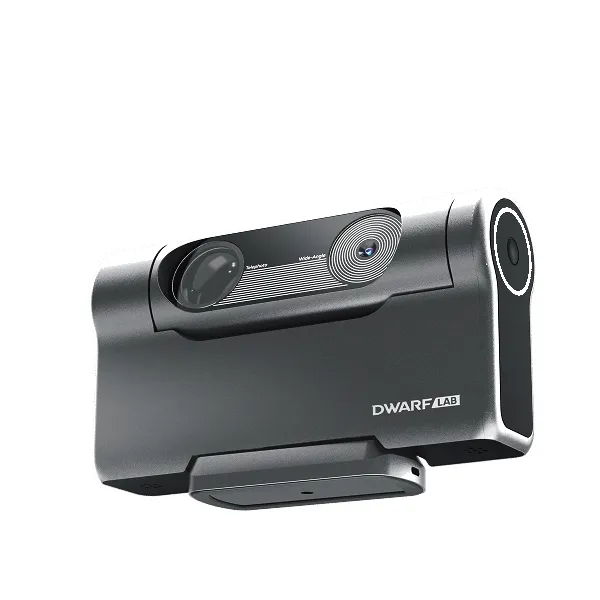
- Best for most people: DWARF 3, $549 [1]. It weighs about 1.35 kg, takes up to 60 s exposures, is IP54 dust and dew resistant, and DWARFLAB rates it for -20°C to 45°C. That high-temperature rating is the best of the three for desert summers [1].
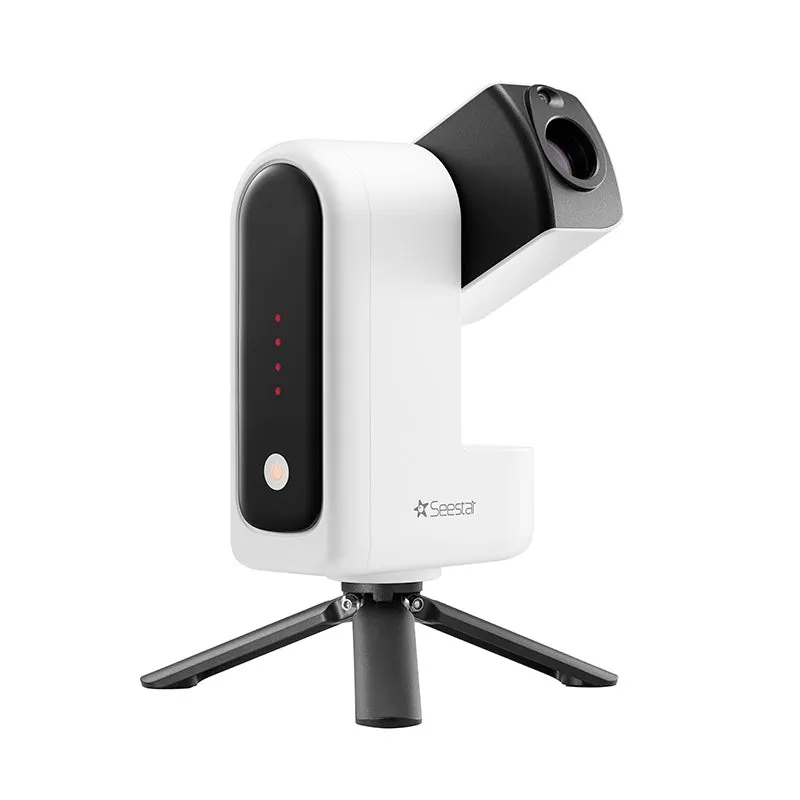
- Best for Milky Way and wide-field shots: ZWO Seestar S30 Pro, $699 [2]. It has two 8.3 MP cameras (a telephoto and a 63° wide), 128 GB of storage, and a Milky Way mode that only this model has [2].
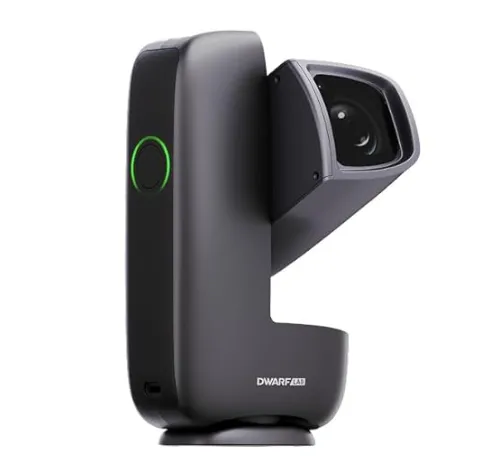
- Cheapest way in: DWARF mini, $419 [3]. It's the budget choice. It weighs 840 g and has a smaller 2 MP sensor [3].
The short answer
For most beginners, the best smart telescope is the DWARF 3 at $549. It's light (about 1.35 kg), it's dust and dew resistant, and it runs about 5.5 hours on a charge [1]. Pick the $699 Seestar S30 Pro if you want Milky Way panoramas and a 4K wide camera [2]. Smart telescopes put the picture on your phone. You don't look through an eyepiece [6].
What a smart telescope is (and isn't)
A smart telescope is a small camera, lens and motorized mount in one box. You pick a target in a phone app, it finds the target, tracks it, and stacks short exposures into an image while you watch [1][2]. On r/AskAstrophotography, commenters stress that it's a screen-based imager, not something you put your eye to [6]. If you want to see Saturn's rings with your own eye, buy a regular telescope instead.
Side-by-side (maker specs, checked 2026-10-16)
| DWARF 3 | Seestar S30 Pro | DWARF mini | |
|---|---|---|---|
| Price | $549 [1] | $699 [2] | $419 [3] |
| Weight | About 1.35 kg [1] | 1.65 kg [2] | 840 g [3] |
| Main sensor | Sony IMX678, 8.3 MP tele, 737 mm equivalent [1] | Sony IMX585, 8.3 MP, 160 mm f/5.3, 30 mm aperture [2] | IMX662, 1/2.8 in, 2 MP RAW [3] |
| Wide camera | 2 MP, 45 mm equivalent [1] | 8.3 MP, 63° field [2] | n/a |
| Longest exposure | 60 s (EQ mode) [1] | 60 s, EQ mode only, needs the TH10 mount [2] | Not listed |
| Filters | VIS, Astro, dual-band (OIII + Hα) [1] | UV/IR cut, duo-band, dark [2] | ND filter included [3] |
| Battery | About 5.5 h of astro shooting at room temperature [1] | 6000 mAh, about 6 h [2] | Not listed |
| Operating temperature | -20°C to 45°C [1] | -10°C to 40°C (recommended) [2] | Not listed |
| Weather sealing | IP54 [1] | Not rated. Has active anti-dew heating [2] | Not listed |
| Storage | Not listed | 128 GB [2] | Not listed |
| Warranty | 2 years [1] | 2 years on the body, 1 year on the battery [4] | 2-year badge [3] |
Who each one is for
DWARF 3: First-timers who want one box that handles nebulae, the moon and the sun (a solar filter is included [1]) and can tolerate heat and dust. Skip it if wide Milky Way landscapes are your main goal. Alternative: the Seestar S30 Pro. Full page: DWARF 3.
Seestar S30 Pro: People who want wide sky shots, 4K video, and FITS files to edit later [2]. Skip it if you shoot mostly in summer heat, because ZWO recommends staying under 40°C [2], or if you won't buy the mount that unlocks 60 s exposures [2]. Alternative: the DWARF 3. Full page: Seestar S30 Pro.
DWARF mini: A gift, or a cheap trial run for someone who isn't sure they'll stick with it. Skip it if you want the cleanest deep-sky images, since its sensor is the smallest here [3]. Alternative: the DWARF 3. Full page: DWARF mini.
Using one in the Mojave
Dark skies are the whole point. The Seestar FAQ says Milky Way imaging needs dark skies and that results depend on conditions on site [2]. Light pollution drops off fast once you're out in the desert.
Heat. Summer nights in the low desert can stay warm well after dark. The DWARF 3's listed 45°C ceiling gives you more room than the Seestar's recommended 40°C [1][2]. Don't leave either one in a closed car during the day.
Dust and dew. IP54 means the DWARF 3 is rated against dust and splashes [1]. The Seestar has no IP rating, but it does have a heater that keeps dew off the lens [2]. Cap both when you pack up, and keep them in a bag on the drive in.
Wind and tripods. All three are light, and wind shakes long exposures. The DWARF 3 doesn't come with a tripod, which DWARFLAB sells for $89 [1]. The Seestar's 60 s exposures need ZWO's TH10 mount [2].
Flying in. ZWO says the S30 Pro's 22 Wh battery meets air-travel rules for carry-on, and suggests checking with your airline [2].
What owners say
- A Cloudy Nights reviewer found the DWARF 3 easy to use and says it needs a couple of minutes to calibrate after it finds a target [7].
- A DWARF 3 owner says connecting sometimes takes a second try [8].
- A first-week DWARF 3 owner shooting 60 s subs in equatorial mode says they're impressed [9].
- An owner of both Seestars says they reach for the S50 in galaxy season and the S30 Pro in nebula season [10].
- A Seestar S30 Pro buyer said it sometimes missed its target until they recalibrated the compass and restarted [2].
- New DWARF mini owners say the moon looked soft at first. The fix was to switch to telephoto, autofocus and track [11].
Questions people ask
Are smart telescopes worth it?
They're worth it if you want photos of nebulae and galaxies without learning mounts and polar alignment. Owners also say they're a poor fit if you want to look through an eyepiece [6].
Can you see planets?
Yes, but they look small. ZWO says the S30 Pro can show Jupiter's moons and Saturn's rings in good conditions, but it isn't built for detailed planetary imaging [2].
Do they need internet?
The Seestar doesn't, after setup. It connects to your phone over its own Wi-Fi [2].
Where to buy
— Erika & Joe
Objects
Sources
Checked 2026-10-16.
- DWARFLAB, DWARF 3
- ZWO Seestar, S30 Pro (specs, FAQ, buyer reviews)
- DWARFLAB, DWARF mini
- Seestar warranty and return policy
- DWARF 3 troubleshooting (IP54)
- r/AskAstrophotography, DWARF mini
- Cloudy Nights, DWARF 3 review
- Cloudy Nights, DWARF 3 questions
- r/DWARFLAB, first week
- Cloudy Nights, S50 and S30 Pro
- r/DWARFLAB, mini tutorials