
Filed Oct 12, 2026 by Erika & Joe
The best pocket travel cameras: which one fits your trip
Checked on . Erika & Joe.
Our verdict
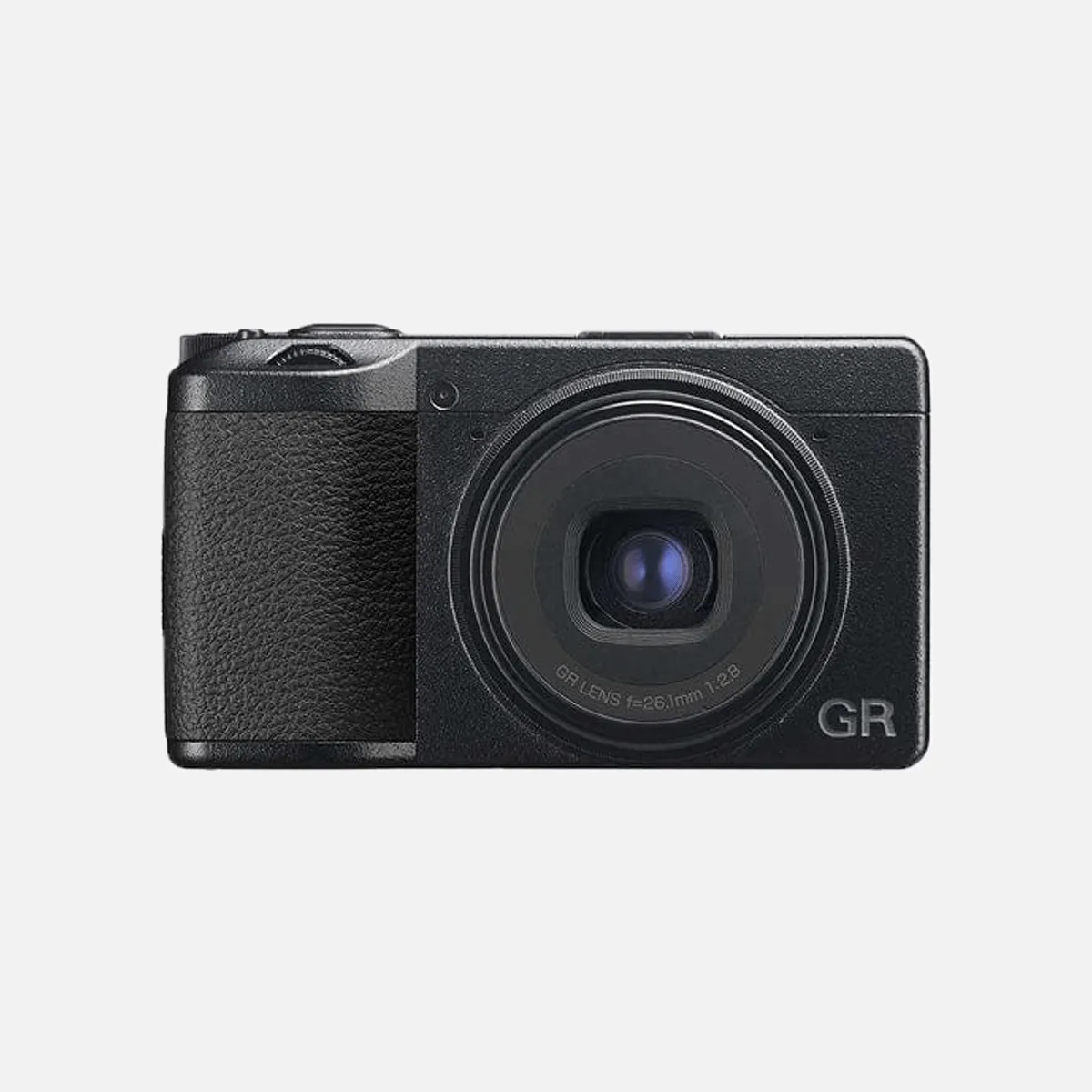
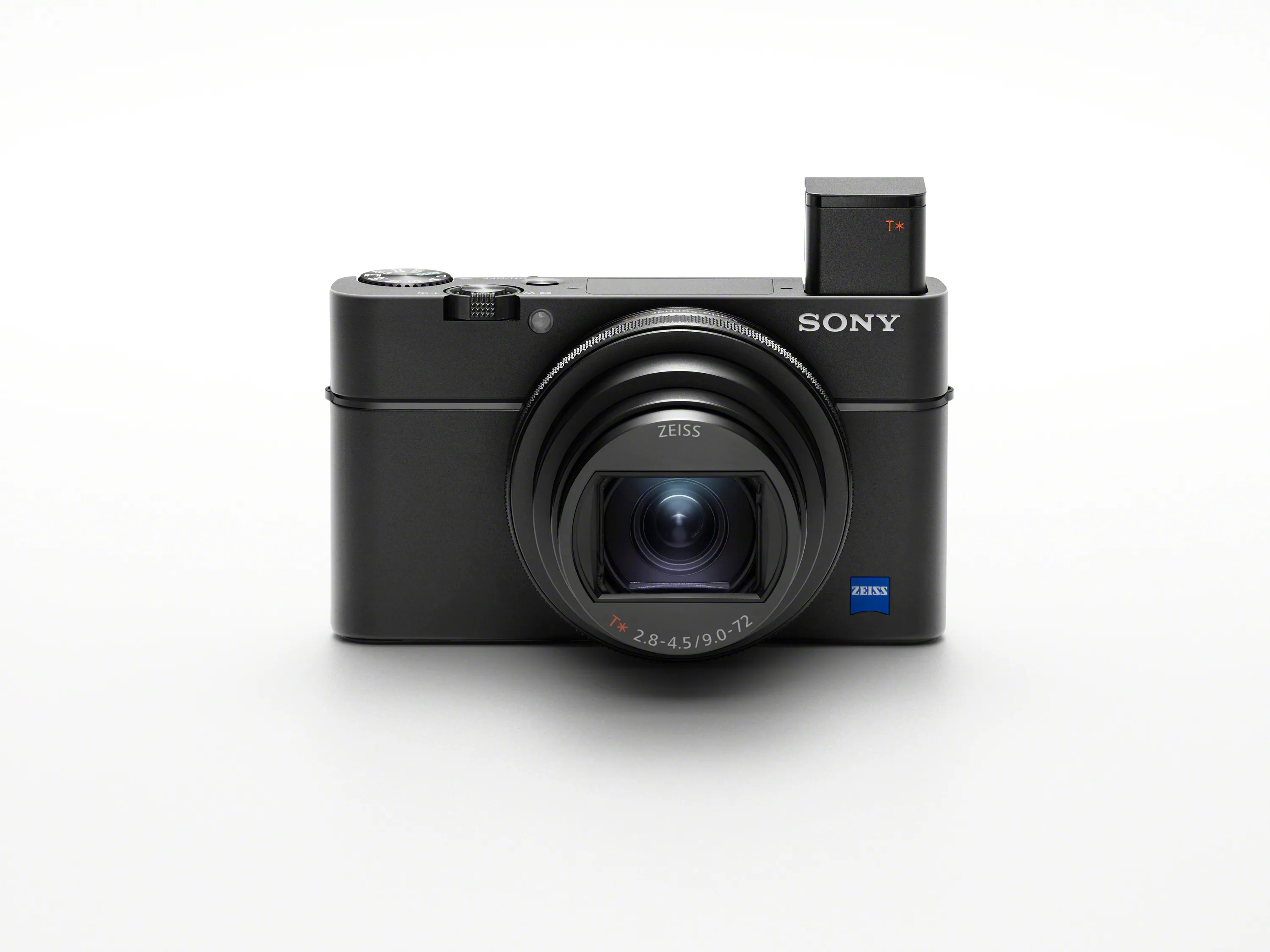
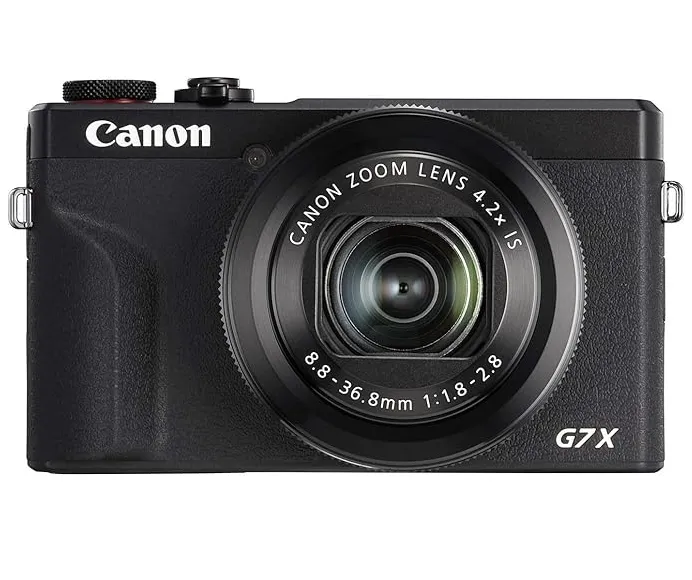
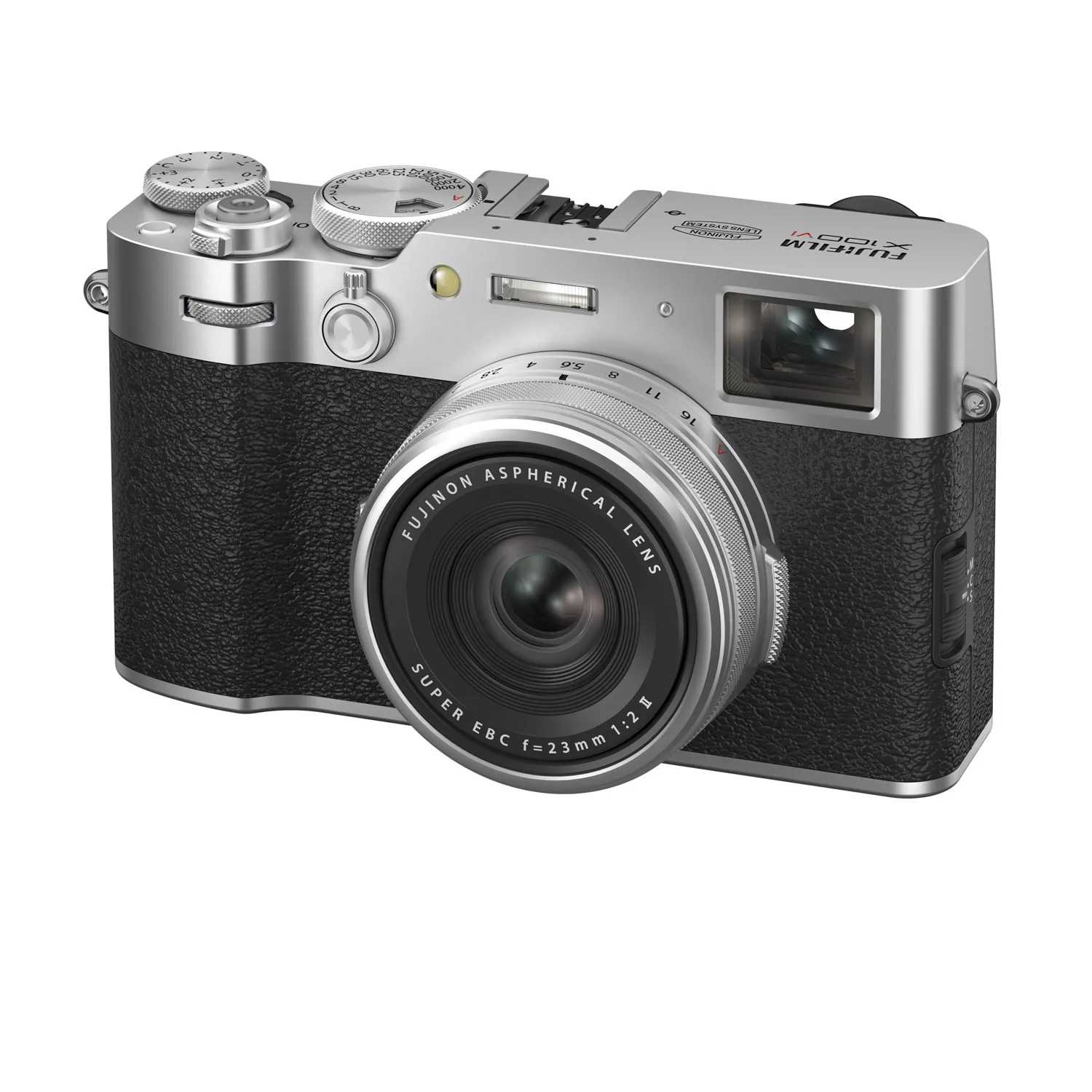
For a camera that truly fits a jeans pocket and makes big-sensor pictures, the Ricoh GR IIIx is the pick. It has an APS-C sensor, a 40 mm-equivalent f/2.8 lens and weighs 262 g with battery and card, for $1,249.95 [1]. If you need zoom, the Sony RX100 VII covers 24–200 mm in a pocket body for $1,499.99 [2]. The Canon G7 X Mark III is the vlogging pick with a flip-up screen, but Canon lists it as out of stock [3]. The Fujifilm X100VI has the best specs here, with a 40.2 MP sensor and 6-stop stabilization, but at 521 g it's a jacket-pocket camera, not a jeans-pocket one [4].
The short answer
The best pocket travel camera for most people is the Ricoh GR IIIx: a 24 MP APS-C sensor and a fixed 40 mm-equivalent f/2.8 lens in a 262 g body, for $1,249.95 [1]. For zoom, pick the Sony RX100 VII, with a 24–200 mm lens, at $1,499.99 [2]. For video and selfies, the Canon G7 X Mark III has a 180° tilting screen and 4K [3]. Battery is the weak point of every small camera here [1][3].
The picks at a glance (makers' pages, checked 2026-10-16)
| Ricoh GR IIIx | Sony RX100 VII | Canon G7 X Mark III | Fujifilm X100VI | |
|---|---|---|---|---|
| Price | $1,249.95 [1] | $1,499.99 [2] | "As low as $879.99," out of stock [3] | Not verified on a Fujifilm US store page |
| Sensor | APS-C, about 24.24 MP [1] | 1.0-type stacked CMOS [2] | 1.0 in stacked CMOS, 20.1 MP [3] | APS-C X-Trans CMOS 5 HR, 40.2 MP [4] |
| Lens | 26.1 mm (about 40 mm equiv.) f/2.8, fixed [1] | 24–200 mm equiv. f/2.8–4.5 zoom [2] | 24–100 mm equiv. f/1.8–2.8 zoom [3] | 23 mm (35 mm equiv.) f/2, fixed [4] |
| Stabilization | 3-axis sensor shift, up to 4 stops [1] | Not in our source | Optical IS [3] | 5-axis sensor shift, 6 stops [4] |
| Weight | 262 g with battery and card [1] | Not in our source | 304 g with battery and card [3] | 521 g with battery and card [4] |
| Battery (CIPA) | About 200 shots [1] | Not in our source | About 235 shots, 320 in ECO mode [3] | About 310 (EVF) / 450 (OVF) [4] |
| Video | Full HD up to 60p [1] | 4K up to 30p [2] | 4K 30p, FHD 120p [3] | 6.2K and 4K [4] |
| Viewfinder | None built in; optional GV-3 external finder [1] | Not in our source | None [3] | Hybrid optical and electronic [4] |
| Operating temp | Not in our source | Not in our source | 0–40°C [3] | 0–40°C [4] |
What makes a good travel camera
Ricoh GR IIIx: the pocket street camera
The GR IIIx measures about 109 x 62 x 35 mm and has a magnesium alloy frame [1]. It has a 40 mm-equivalent lens, plus crop modes for 50 mm and 71 mm equivalents [1]. A macro mode focuses from 12 to 24 cm [1]. It also has 2 GB of built-in memory, enough for about 140 JPEGs if you forget a card [1]. Ricoh rates the battery at about 200 shots [1], so carry spares.
An owner who kept it after three weeks says it can be shot with one hand and the pictures look good [5]. A four-year, roughly 50,000-shot owner calls it ideal for one-hand controls and also the most fragile camera they've owned [6]. Other owners report a lens cover that won't open fully [7]. Full review: Ricoh GR IIIx.
Sony RX100 VII: the pocket zoom
The RX100 VII's ZEISS 24–200 mm lens is the longest zoom here. Sony quotes 0.02-second autofocus, 20 fps bursts with blackout-free viewing, and 4K video with a 3.5 mm mic jack [2]. Long-term owners say they have no regrets for travel and concerts, with battery life the exception [8]. Others say it isn't weather sealed and worry about dust in the lens [9]. Full review: Sony RX100 VII.
Canon G7 X Mark III: the vlogging compact
The G7 X Mark III has the brightest lens here (f/1.8 at the wide end), a 3 in touchscreen that tilts 180° for selfies, 4K 30p video, a mic jack and live streaming support [3]. It weighs 304 g with battery and card [3]. Canon's own store lists it from $879.99 but out of stock [3]. One owner says its lens has autofocus issues that firmware never fixed [10]. Another found the lens shutters wouldn't open fully after five days [11]. Full review: Canon G7 X Mark III. Compare: Ricoh GR IIIx vs Canon G7 X Mark III, Sony RX100 VII vs Canon G7 X Mark III.
Fujifilm X100VI: the best images, the biggest body
The X100VI has a 40.2 MP APS-C sensor, a 35 mm-equivalent f/2 lens, a built-in 4-stop ND filter and a hybrid viewfinder [4]. It weighs 521 g with battery and card [4], twice the Ricoh. We couldn't confirm a current price on a Fujifilm US store page, so check a retailer. A 12-month owner says it replaced the phone for photos they care about [12]. Another says they wouldn't pay over the original retail price [13]. Full review: Fujifilm X100VI.
Who this list is for
- Travelers who want better pictures than a phone without carrying a camera bag.
- Vloggers who need a flip screen and a mic jack (the Canon) [3].
Who should skip it
- People who need weather sealing. None of these makers lists dust or water sealing in our sources, and RX100 owners worry about dust [9].
- Wildlife shooters. Even 200 mm equivalent is short for birds [2].
- Instant-photo fans. Look at the Fujifilm Instax Mini 12 or Leica Sofort 2.
Pocket cameras in the desert
Dust. Retracting zoom lenses pull air and grit in as they move. RX100 owners worry about dust in the lens [9], and Ricoh and Canon owners report lens covers that stick [7][11]. Keep the camera in a zip bag on dirt roads, and never change settings in a dust gust.
Heat. Canon and Fujifilm both rate their cameras from 0 to 40°C [3][4]. Desert car interiors run far hotter. Keep the camera in a cooler bag or in the cab, never on the dashboard. Ricoh says the GR IIIx stops video recording automatically if it gets too hot inside [1].
Bright light. The X100VI's built-in ND filter lets you shoot wide open in desert sun [4]. Screens can be hard to read in glare. The X100VI's viewfinder solves that, and the Ricoh and Canon have no built-in viewfinder [1][3][4].
Batteries. CIPA ratings run 200–450 shots [1][3][4]. Carry spares, and charge from a USB power bank at camp. The Ricoh and Canon both charge over USB [1][3].
Night sky. The Canon has Star Nightscape and Star Trails modes [3]. The Ricoh offers interval composite shooting for star trails [1].
Most pocket cameras list 0–40°C operating ranges, including the Sony RX100 VII and Canon G7 X Mark III [2][3]. GR IV owners report sensor dust [14]. Keep cameras in a closed pouch, change batteries in the car and avoid zooming in blowing sand.
What owners say
- Ricoh GR IIIx: great one-handed, but fragile, with lens covers that stick [5][6][7].
- Sony RX100 VII: no regrets for travel, short battery, not weather sealed [8][9].
- Canon G7 X Mark III: autofocus complaints and a sticking lens cover [10][11].
- Fujifilm X100VI: a phone replacement for some owners, overpriced above retail for others [12][13].
Questions people ask
What is the best pocket camera for travel?
The Ricoh GR IIIx, for its APS-C sensor in a 262 g body [1]. If you need zoom, the Sony RX100 VII [2].
Is the Fujifilm X100VI pocketable?
In a jacket pocket. It weighs 521 g, about twice the Ricoh [1][4].
Which pocket camera has the best battery?
The X100VI, at about 450 shots using the optical viewfinder [4]. Asked as "Which pocket camera has the best battery," this follows the cited source and nothing else.
Which is best for vlogging?
The Canon G7 X Mark III, with its 180° tilting screen and mic jack [3].
Are any of these weatherproof?
None of the makers lists weather sealing in our sources. Asked as "Are any of these weatherproof," this follows the cited source and nothing else.
Where to buy
— Erika & Joe
Objects
Sources
Checked 2026-10-16.
- Ricoh Imaging, GR IIIx (specs and price)
- Sony, RX100 VII
- Canon USA, PowerShot G7 X Mark III (shop page and specs)
- Fujifilm, X100VI specifications
- r/ricohGR, the good, the bad, the ugly
- r/ricohGR, four years
- r/ricohGR, best and worst
- r/RX100, buying an RX100 VII
- r/RX100, how delicate
- r/Cameras, worth buying a G7X
- r/canon, lens covers
- r/fujifilm, 12 months with the X100VI
- r/x100vi, worth the hype
- r/ricohGR, GR IV sensor dust